• Please take a moment and update your account profile. If you have an updated account profile with basic information on why you are on Air Warriors it will help other people respond to your posts. How do you update your profile you ask?

    Go here:

    Edit Account Details and Profile

U-2 retirement in 2026

Llarry

Well-Known Member
Unless I missed something here on AW, I don't think we've heard of the retirement this year of the entire USAF U-2 inventory. As a former cryppie, this does not sound good. I recognize that there is great capability in space-based collection, but that comes at great cost and some limitations.

I believe that there were 31 active aircraft at the beginning of the year (27 U-2S, 4 dual seat TU-2S trainers).

If this news is legitimate (and there is no last-minute reprieve), farewell to the Dragon Lady -- Well done for decades of valuable service!
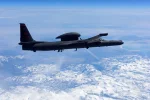
U-2S.jpg
 
Sources are saying FY-26, so probably starting in October time-frame.
The U.S. Air Force is officially scheduled to retire the iconic U-2 Dragon Lady fleet in Fiscal Year 2026, with active divestment of the aircraft beginning as early as October. The iconic Cold War-era spy plane—stationed primarily at Beale Air Force Base in California—is being replaced by advanced stealth drones, space-based sensors, and next-generation command and control systems. [1, 2, 3]
@HuggyU2 probably knows the details, and has probably been invited to the official sundown ceremony.
 
There are a lot of conversations being had among the various ISR communities in their respective SCIFs about this.


The USAF, and ACC in particular, has never been fond of any ISR (or EA/EW) platform. The U-2 is the antithesis of ACC's golden children. It's not a fighter, it doesn't carry weapons at all. But it takes pictures and collects data that is invaluable to decision makers.

We think unmanned can replace it. Maybe. ACC is still planning on sundowning the MQ-9 soon enough without a real replacement.
 
I believe Huggy had mentioned that the schoolhouse at Beale has been closed for a while now.
 
Retire them in FY26 or FY27? FY27 would start Oct 1st.
FY26. This article says they’ve already sent some to the boneyard. First one in January 2026, then 3 more were scheduled a month later. So, by Sep 2026, they should all be gone, barring a reprieve from Congress.
Jan 25, 2026: The first U-2 to be retired is now in the ‘boneyard’ at Davis-Monthan AFB, AZ. Three more are set to follow over the next few months, with four more likely to join them by the fall. But in the Fiscal Year 2026 Defense Appropriations Bill that was passed last week, Congress has insisted that the remainder be kept operational for the time being.
 
Unless I missed something here on AW, I don't think we've heard of the retirement this year of the entire USAF U-2 inventory. As a former cryppie, this does not sound good. I recognize that there is great capability in space-based collection, but that comes at great cost and some limitations.

Our space capabilities are expanding rapidly at an almost exponential rate, and while I mourn the loss of aircraft like the U-2 and the EP-3 there is a cost-benefit analysis done by the service, the military and the intelligence communities for platforms like this and at this point the juice just not may be worth the squeeze when it comes to the U-2.

Th example I always like to use is the USAF CSAF mentioned years ago that retiring the A-10 fleet would save him the equivalent if he retired 3 times the number of aircraft in the F-16 fleet. How so? All the unique costs associated with maintaining a unique aircraft fleet to include everything from engines to airframes and all the training and maintenance associated with the airframe. Same reason the USAF retired the KC-10 before the KC-135 despite being 15-20 years younger and 'more capable' and I imagine the same reasoning is behind the U-2 retirement.
 
Our space capabilities are expanding rapidly at an almost exponential rate, and while I mourn the loss of aircraft like the U-2 and the EP-3 there is a cost-benefit analysis done by the service, the military and the intelligence communities for platforms like this and at this point the juice just not may be worth the squeeze when it comes to the U-2.

Th example I always like to use is the USAF CSAF mentioned years ago that retiring the A-10 fleet would save him the equivalent if he retired 3 times the number of aircraft in the F-16 fleet. How so? All the unique costs associated with maintaining a unique aircraft fleet to include everything from engines to airframes and all the training and maintenance associated with the airframe. Same reason the USAF retired the KC-10 before the KC-135 despite being 15-20 years younger and 'more capable' and I imagine the same reasoning is behind the U-2 retirement.

The U-2 is expensive. 100%.

But, the U-2 has capabilities that no other platform does. That’s not hyperbole, it’s an actual fact and has been shown how effective in recent months/years. And it’s been sought out by every COCOM.

Unfortunately the decision hasn’t changed, officially. But the future looks promising.
 
But, the U-2 has capabilities that no other platform does. That’s not hyperbole, it’s an actual fact and has been shown how effective in recent months/years. And it’s been sought out by every COCOM.

Does it really though?* Many of its capabilities are shared across many platforms across several different areas, while the U-2 fits into the puzzle that no one else can fill as of right now. But is it worth filling that 'gap'? Many other platforms had 'unique' capabilities but they were retired too from the SR-71 to the ES-3 and the E-8, and those 'gaps' were not filled after their platforms were retired. As a former EP-3 buy I'd love to see an EP-8 replacement, but that ship sailed about 15-20 years ago.

As for the COCOM's....*sigh*, they ask for everything and anything they think can help them. Then they'll ask for more, and more....and more. Shoot the EP-3 was deployed up until the very end of its life, and then extended.

1782830745557.png


Why do I keep hammering this point home? Folks often times get fixated on platforms when they should be focused on capabilities. That fixation extends to particular platforms that capture the public imagination like the A-10, U-2 and the SR-71, overriding reason while minimizing the limitations and redundancies of those particular platforms when discussing them.

*I am far from ignorant on the subject.
 
Does it really though?* Many of its capabilities are shared across many platforms across several different areas, while the U-2 fits into the puzzle that no one else can fill as of right now. But is it worth filling that 'gap'? Many other platforms had 'unique' capabilities but they were retired too from the SR-71 to the ES-3 and the E-8, and those 'gaps' were not filled after their platforms were retired. As a former EP-3 buy I'd love to see an EP-8 replacement, but that ship sailed about 15-20 years ago.

As for the COCOM's....*sigh*, they ask for everything and anything they think can help them. Then they'll ask for more, and more....and more. Shoot the EP-3 was deployed up until the very end of its life, and then extended.

View attachment 45378


Why do I keep hammering this point home? Folks often times get fixated on platforms when they should be focused on capabilities. That fixation extends to particular platforms that capture the public imagination like the A-10, U-2 and the SR-71, overriding reason while minimizing the limitations and redundancies of those particular platforms when discussing them.

*I am far from ignorant on the subject.
If you have access, I encourage you to look it up on JWICS. Unfortunately there isn’t much else I can say.

And yes, again, it’s not hyperbole. That’s why the COCOMs are fighting against big HAF to keep the U-2.
 
If you have access, I encourage you to look it up on JWICS. Unfortunately there isn’t much else I can say.

And yes, again, it’s not hyperbole. That’s why the COCOMs are fighting against big HAF to keep the U-2.

Like I said, I am not ignorant of the issues and the debate and still disagree that the juice is worth the squeeze.
 
Folks often times get fixated on platforms when they should be focused on capabilities.

In my opinion, being able to talk to a human being while onstation is an invaluable and often overlooked capability when considering the shift to an entirely space based or unmanned future. Regardless of how the data is collected (via access to some magical feed or organically ingested), being able to speak in LOS comms to someone else in the area or on the ground is certainly an important feature that cannot be ignored. I would love to know specifics (and I know I wont get them here) about the latency of information promulgation now that things have gone the way of "sensor to watch floor, to supervisor, to chat, to asset, to broadcast, to operator" when in the EP-3 or likewise it was "hey you, I have something that can kill you, go away" and end of story (likely oversimplification but still...).

I'm also curious in the unmanned community how "exercising commander's intent" or in VP world "Mission commander's discretion" goes when you have phone call access on a watch floor to a higher up for time critical decisions. Basically, do we lose the "let the aviator make the decision they feel they need to in the moment and then answer for it postflight if necessary" though process? Are the unmanned seat riders less empowered or entrusted with less responsibility or authority like in a regular manned aircraft?
 
sensor to watch floor, to supervisor, to chat, to asset, to broadcast, to operator
I’ve thought about the idea that once you get the asset overhead, the operator controls it. The JTAC actually drives the asset, maybe in broad terms that the asset turns into detailed maneuvers.

The tech will be there to execute.
 
Back
Top