PMA-202 contracted for 5,000 + Next Gen Fixed Wing Helmet System kits....
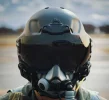

What a legitimate timeline though before these are actually fielded to squadrons?
I don’t have an answer but apparently E-2 squadrons are getting them first. Per a TW AMSO.
Are masks only for emergencies in the E-2?I would be shocked, but E-2s may be easier because no need to test/implement anything extra to the helmet like NVGs or JHMCS
Hopefully it provides some better noise cancellation
Are masks only for emergencies in the E-2?

Not required to tank? In Hoover we had to mask up for tanking.Yeah, but pretty rare to use it
NopeNot required to tank? In Hoover we had to mask up for tanking.

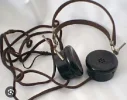
But an active noise reduction headset is mandatory these days. The reduction in fatigue is significant and I'm sure there is a significant reduction in hearing degradation.
Unfortunately I can't find the link (again), but I recently saw another study that specifically attempted to measure the protection vs cancellation question. Bottom line, cancellation was very effective at reducing actual noise at the frequencies it excels at, specifically low frequencies. That makes sense given how much engine rumble you can reduce when you turn the system on.
But higher frequencies aren't truly defeated by cancellation and can still get through to cause damage. Something of note if flying pistons, but a much bigger deal if flying turbines. These higher freqs are better mitigated by attenuation. Unfortunately the modern NC headset is pretty weak on attenuation in an effort to save weight, so their passive hearing protection isn't great, and less than the standard DC 13.4 headset that's been around for several decades (and still work great).
The use of active headsets is appropriate when supplementary protection against low frequency noise and good communication are needed. This is typically the case for crewmembers of armored vehicles, propeller aircraft or helicopters. For other noise sources like jet engines the use of ANR earmuffs will not bring any supplementary protection. In figure 23 a typical third octave band noise close to a fighter aircraft (position of ground support during takeoff) is compared to noise inside an armored vehicle. It can be seen that the maximum level for the jet engine noise is situated at frequencies (>600 Hz) where the ANR in earmuffs is no more effective (figure 15). Worse, the ANR system amplifies the residual noise just at these frequencies (figure 16).

I logged in with my CAC, on my NIPR computer even, and all I get from that link is a 404 Not Found page :/I found the link to the study, but unfortunately I can't seem to get to the file. Not sure if it's my browser or it needs a CAC cert, but here's the link: http://www.dtic.mil/dtic/tr/fulltext/u2/a444679.pdf

Curious as to what headset is issued to IPs and SNAs in multi engine T-54A in Corpus?
Bose A20 is ubiquitous in AF land. Even for preflight headset for Bomber crews. These come open purchase through GPC at squadron or Wing level. A number of GSA vendors keep on hand in quantity.