• Please take a moment and update your account profile. If you have an updated account profile with basic information on why you are on Air Warriors it will help other people respond to your posts. How do you update your profile you ask?

    Go here:

    Edit Account Details and Profile

Weather

The Rowe Creek complex has been burning for a month or two in Oregon, and yet it remains highly active. From last night‘s status activity…my bold font.

Firefighters are preparing for a challenging night on the Rowe Creek Complex. High temperatures, along with relative humidity levels that dropped below 10% today, and extremely dry fuels have combined to increase fire activity in multiple locations of the fire. Crews have been briefed on these hazards and are prepared to adjust their tactics as conditions may change.

A Red Flag Warning specific to the fire area remains in effect through 11 p.m. A large smoke column with a pyrocumulus cloud developed over the fire throughout the day and was visible from surrounding communities. If the column collapses, it can push winds, smoke and embers outward in unexpected directions. This can result in long-distance spotting, new spot fires and rapid fire spread. Poor overnight humidity recovery could also allow vegetation to remain dry and receptive to embers through the night.

Here's a good explanation of the Pyrocumulus Cloud...pretty amazing as a micro-climate.
 
Interesting note from fire suppression efforts…

Yesterday an Unmanned Aircraft System (UAS) conducted firing operations in the Grouse Creek area, tying the fire into dozer line near Chickamin and Grouse Creeks and helping secure this challenging area, where gusty, erratic winds from recent thunderstorms have contributed to active fire spread.

So basically they had a quadcopter dropping napalm. Nice!

https://share.watchduty.org/i/108855?ts=1786839298000
 
Forecasting for Hurricane Isaias was fascinating. Traditional models had the storm west of Biloxi; however, the Google DeepMind AI predicted around Eglin AFB with a stronger landfall.

Congrats to Google - it was impressive.
 
Forecasting for Hurricane Isaias was fascinating. Traditional models had the storm west of Biloxi; however, the Google DeepMind AI predicted around Eglin AFB with a stronger landfall.

Congrats to Google - it was impressive.
In August, the Google folks published a paper in Nature talking about their model. Pretty interesting stuff.

 
In August, the Google folks published a paper in Nature talking about their model. Pretty interesting stuff.

I think Ask Jeeves could do a better job than my area weather readers.
 
I think Ask Jeeves could do a better job than my area weather readers.

I've mentioned this before, but I think the much bigger problem is that there's more iterative non-human prediction going on over the short-term that has replaced the conventional forecaster. In my region, I'll see wide swings of predictions over the course of 12 hours as the weather develops. But usually the prediction at hour 12 ends up matching hour 1. A human forecaster would cull that iterative noise more effectively.

This last storm passage is a perfect example. For two nights, it said it was going to be VFR with some rain all night. It was not.

This is kind of analogous, albeit on a bigger scale, to when the Navy replaced their local forecasters with centralized forecasters. The centralized forecasters didn't know the local weather patterns, so they'd be way off during more dynamic weather. Except now the local iterative predictive models do know the local patterns and they seem to be worse at prediction.
 
I've mentioned this before, but I think the much bigger problem is that there's more iterative non-human prediction going on over the short-term that has replaced the conventional forecaster. In my region, I'll see wide swings of predictions over the course of 12 hours as the weather develops. But usually the prediction at hour 12 ends up matching hour 1. A human forecaster would cull that iterative noise more effectively.

This last storm passage is a perfect example. For two nights, it said it was going to be VFR with some rain all night. It was not.

This is kind of analogous, albeit on a bigger scale, to when the Navy replaced their local forecasters with centralized forecasters. The centralized forecasters didn't know the local weather patterns, so they'd be way off during more dynamic weather. Except now the local iterative predictive models do know the local patterns and they seem to be worse at prediction.
As ever, being your own weather forecaster is an asset in aviation, among other outdoor pursuits.

The windy.com forecast still seems to be among the best, at least in my neck of the woods.
 
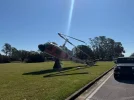
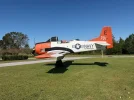
Oof. Who pays for/does the repairs for the planes on sticks anyways? I know occasionally in Jax the chiefs messes would clean the P-2 and P-3, but don’t know how the base kept them up overall.
Great question. When I was last in the federal workforce, they were managed under a DoD instruction (DoDI 4715 maybe?) that put responsibility on the base Cultural Resource Manager who often passed it off to the facilities manger or better yet a volunteer group. The army has been working hard to get rid of all their outdoor displays like tanks, helicopters, and cannon for quite some time - often with little success. I’m not sure what the navy thinks of them but I do remember when they got rid of that most expensive historic object…a ship (still in the water) when the NHRC sold off the USS Barry (DD-933) for scrap. CRM guys see them as a cash drain and the old timers love them.
 
Back
Top