The Soviet Union was naturally bothered by various Western photo recon overflights in the 1950s. CIA camera-carrying balloons that took advantage of prevailing high-altitude wind patterns, RAF Canberras and of course the ultimate: CIA U-2s cruising over the USSR with impunity from 1956-on.
I'm not aware of any serious early effort by the Soviets to design their own high-altitude recon aircraft. But after a U-2 was finally brought down by Soviet SA-2 Guideline SAMs in 1960, the Beriev design bureau was tasked with designing a Soviet copy of the U-2 designated the S-13. For whatever reason, the effort was soon abandoned.
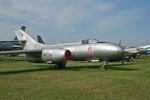
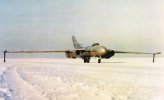
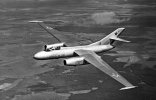
On a separate track, Myasishchev designed a high-altitude interceptor to shoot down the balloons. By the time the prototype was finished, the balloon flights had ceased. Nevertheless, Article 34 was finished in 1978 and ready to begin testing. In taxi testing, the aircraft hit a snowbank and was destroyed. (What is this -- the Keystone Cops?)
Myasishchev did not give up and further refined the design into the M-17 Stratosphera (NATO Mystic A). Twin upward oblique-firing 23mm cannon and optional air-to-air missiles were included. The M-17 flew in 1982 and at least two were built. By that time, the U-2 had been reborn as the U-2R and got a bit more ceiling; the Soviets were still playing catch-up.
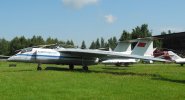
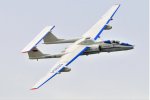
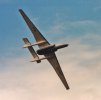
The ultimate Myasishchev iteration was the twin-engined M-55 Geophysica (NATO Mystic B) which first flew in 1988. Just five were produced and they were unarmed -- the balloon threat was ancient history by now. The stated mission was science. The Russians are rumored to be attempting to bring a single M-55 back info service as a high-altitude recon aircraft for use in the war in Ukraine. The M-55's ceiling is estimated at 70,000 feet -- I would think that Ukraine would not have difficulty in bring such an aircraft down with a SAM.
I'm not aware of any serious early effort by the Soviets to design their own high-altitude recon aircraft. But after a U-2 was finally brought down by Soviet SA-2 Guideline SAMs in 1960, the Beriev design bureau was tasked with designing a Soviet copy of the U-2 designated the S-13. For whatever reason, the effort was soon abandoned.
On a separate track, Myasishchev designed a high-altitude interceptor to shoot down the balloons. By the time the prototype was finished, the balloon flights had ceased. Nevertheless, Article 34 was finished in 1978 and ready to begin testing. In taxi testing, the aircraft hit a snowbank and was destroyed. (What is this -- the Keystone Cops?)
Myasishchev did not give up and further refined the design into the M-17 Stratosphera (NATO Mystic A). Twin upward oblique-firing 23mm cannon and optional air-to-air missiles were included. The M-17 flew in 1982 and at least two were built. By that time, the U-2 had been reborn as the U-2R and got a bit more ceiling; the Soviets were still playing catch-up.
The ultimate Myasishchev iteration was the twin-engined M-55 Geophysica (NATO Mystic B) which first flew in 1988. Just five were produced and they were unarmed -- the balloon threat was ancient history by now. The stated mission was science. The Russians are rumored to be attempting to bring a single M-55 back info service as a high-altitude recon aircraft for use in the war in Ukraine. The M-55's ceiling is estimated at 70,000 feet -- I would think that Ukraine would not have difficulty in bring such an aircraft down with a SAM.