• Please take a moment and update your account profile. If you have an updated account profile with basic information on why you are on Air Warriors it will help other people respond to your posts. How do you update your profile you ask?

    Go here:

    Edit Account Details and Profile

Ship Photo of the Day

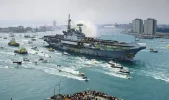
USS Abraham Lincoln corrosion. There are ships that went through WWII that had less corrosion. Is this a function of current coating methods, lack of command attention to ship appearance while underway, or other considerations? During my WESTPAC in the mid-80's there as an LPD, I think is was the Deluth, that looked like it just came out of overhaul. Immaculate cleanliness and paint. You would see sailors chipping, needle gunning, and painting, every time you landed on her. Her officers and crew had incredibly high morale, and were proud to show you "their" ship. So again I ponder, what lead to this level of visible corrosion.
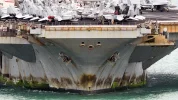
1788400104402.webp
 
USS Abraham Lincoln corrosion. There are ships that went through WWII that had less corrosion. Is this a function of current coating methods, lack of command attention to ship appearance while underway, or other considerations? During my WESTPAC in the mid-80's there as an LPD, I think is was the Deluth, that looked like it just came out of overhaul. Immaculate cleanliness and paint. You would see sailors chipping, needle gunning, and painting, every time you landed on her. Her officers and crew had incredibly high morale, and were proud to show you "their" ship. So again I ponder, what lead to this level of visible corrosion.

View attachment 46142
Coating methods is a big one but there’s honestly a lot to unpack there.

We stopped using lead based paints. Some of it is definitely EPA driven, but the crew HAZMAT lead exposure aspect of it is honestly a stronger one (all that chipping and needle gunning has that now aerosolized lead going…somewhere). Modern ones supposedly work just as well, and better in some protective aspects, but generally need more professional application and prep than untrained 19 year old kids can do.

We generally dont pay for the time needed. If you want a real good paint job, you really need some down time during the right environmental conditions. Ideally a dry dock availability. Painting a ship in San Diego summer? Not too bad. Doing one in Norfolk? Flip a coin if the weather supports. Operationally, we have also been riding the dwindling Fleet like a rented step mule for decades.

Crew size reductions didn’t help either on the manpower side - not as much labor to do all that chipping, grinding, sanding, painting upkeep. But to clarify for this one specifically though - can’t really put this in the crew. Very limited what you can do when deployed and underway doing combat ops continuously like they were.
 
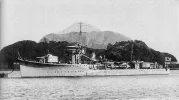
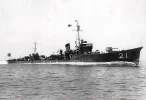
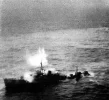
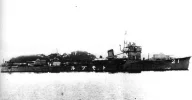
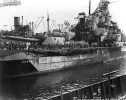
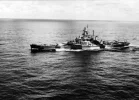
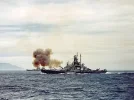
As an example of you can only push engineering so far, Japan produced the Chidori class torpedo boat. To circumvent the London Naval Treaty, these “Torpedo Boats” were 269’ long, a beam of 24’3” and a displacement at max load of 780 tons. On this small ship, the IJN mounted three 5” guns and four 21” torpedo tubes, half the armament of a full sized destroyer. This led to disastrous topweight issues which led to the capsizing of IJN Tomozuru in 1934 during a storm. An engineering study resulted in a redesign of the ship and lessons learned for subsequent shipbuilding: a massive armament is no good if the ship turns upside down in rough weather.

1788639210199.webp
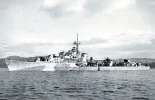
Initial look of Chidori(November 1933)

1788639281899.webp
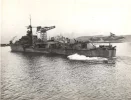
Chidori on trial run off Maizuru, after 1934 refit

1788639346705.webp
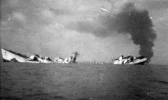
Tomozuru on 24 March 1945

1788639417766.webp
IJN Chidori class Tomozuru1934
 
As an example of you can only push engineering so far, Japan produced the Chidori class torpedo boat. To circumvent the London Naval Treaty, these “Torpedo Boats” were 269’ long, a beam of 24’3” and a displacement at max load of 780 tons. On this small ship, the IJN mounted three 5” guns and four 21” torpedo tubes, half the armament of a full sized destroyer. This led to disastrous topweight issues which led to the capsizing of IJN Tomozuru in 1934 during a storm. An engineering study resulted in a redesign of the ship and lessons learned for subsequent shipbuilding: a massive armament is no good if the ship turns upside down in rough weather.

View attachment 46160
Initial look of Chidori(November 1933)

View attachment 46161
Chidori on trial run off Maizuru, after 1934 refit

View attachment 46162
Tomozuru on 24 March 1945

View attachment 46163
IJN Chidori class Tomozuru1934
The Tomozuru study had a big impact on the IJN, perhaps mostly on the Mogami class cruiser where it was determined that designers added excessive top weight that not only caused instability, it caused cracks in the hull welds when the guns were fired in full battery.
 
The Tomozuru study had a big impact on the IJN, perhaps mostly on the Mogami class cruiser where it was determined that designers added excessive top weight that not only caused instability, it caused cracks in the hull welds when the guns were fired in full battery.
Additionally, the Mogami class were classified as light cruisers mounting triple 6” turrets. As war approached, these 6” turrets were pulled off and replaced by twin 8” cannons whose new turrets not so coincidentally had the same diameter- presto, instant heavy cruiser. (and these 6” turrets were then installed as secondaries on the Yamatos.)

This forward thinking has carried through as the Izumo class helicopter “destroyers” seemed to have little problem converting to the F-35.
 
Back
Top