• Please take a moment and update your account profile. If you have an updated account profile with basic information on why you are on Air Warriors it will help other people respond to your posts. How do you update your profile you ask?

    Go here:

    Edit Account Details and Profile

Ship Photo of the Day

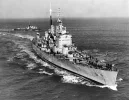
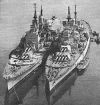
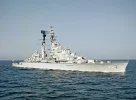
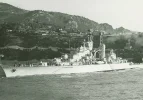
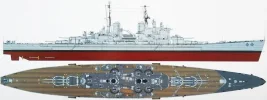
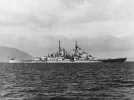
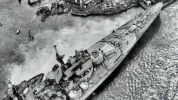
Just finished watching a battleship tournament on YouTube. Almost all of these tournaments end with Yamato vs Iowa, but in this playoff. Britain’s HMS Vanguard beat Tirpitz, Yamato and Iowa in successive fights to claim the championship. Hard to believe with only 8 x 15” cannons, but strange things happen when you start throwing 1 ton shells around.

Edit: looks like 1 of the big factors was the Iowa captain (who should be court martialed for incompetence in this battle) closed the range and then secondary armament became a significant factor. The British quick firing 5.25 throws an 80 armor piercing shell which has a significant advantage over the US 5” 55 lb shell.
1765422438221.jpeg

1765422465441.jpeg

1765422505225.jpeg

1765422559971.jpeg

1765422608152.jpeg
 
Just finished watching a battleship tournament on YouTube. Almost all of these tournaments end with Yamato vs Iowa, but in this playoff. Britain’s HMS Vanguard beat Tirpitz, Yamato and Iowa in successive fights to claim the championship. Hard to believe with only 8 x 15” cannons, but strange things happen when you start throwing 1 ton shells around.

Edit: looks like 1 of the big factors was the Iowa captain (who should be court martialed for incompetence in this battle) closed the range and then secondary armament became a significant factor. The British quick firing 5.25 throws an 80 armor piercing shell which has a significant advantage over the US 5” 55 lb shell.
View attachment 44085

View attachment 44086

View attachment 44087

View attachment 44088

View attachment 44089
Im gonna call BS that a main battery of WWI era guns bolted to a similar era ship built in fits and start would be equal the ones we had even if Iowa wasn’t what the Navy actually wanted and was in reality just the North Carolina/South Dakota we would have designed outside treaty limits if allowed. Furthermore it’s not the armor thickness or gun caliber that makes those ships actually effective. The Brit’s were adopting the US developed fire directors for both AA and rifled guns across their fleet towards the end of the war. We were allies afterall….

The 3 inch prox fused AA and fire directors is well known but of the secondary armament was what made vanguard so lethal in these tests, the Navy Mk37 fire directors is the reason it worked.
 
Im gonna call BS that a main battery of WWI era guns bolted to a similar era ship built in fits and start would be equal the ones we had even if Iowa wasn’t what the Navy actually wanted and was in reality just the North Carolina/South Dakota we would have designed outside treaty limits if allowed. Furthermore it’s not the armor thickness or gun caliber that makes those ships actually effective. The Brit’s were adopting the US developed fire directors for both AA and rifled guns across their fleet towards the end of the war. We were allies afterall….

The 3 inch prox fused AA and fire directors is well known but of the secondary armament was what made vanguard so lethal in these tests, the Navy Mk37 fire directors is the reason it worked.
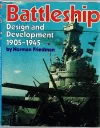
Thought you might like this book from the incomparable Norman Freidman.

1765552934806.jpeg

Interesting that most navies chose 6” secondaries for their dreadnoughts which were much more effective in an anti-ship role while the US went with 5” guns which, although technically dual purpose, lack stopping power against cruisers and destroyers but were phenomenal against aircraft.

In a battleship 1v1, it would make sense for a US ship to fight at a long distance outside of the range of secondaries.

(a 6” super heavy shell weighed 130 lbs, the 5” / 38 shell weighed 55 lbs although the 5” / 54 for the Montanas was a 69 lb shell)
 
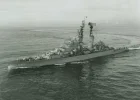
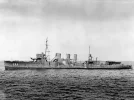
The last gun cruiser in service was the Dutch light cruiser HNLMS De Ruyter, laid down on 5 September 1939 but not completed and commissioned until 1953.

In 1973, she was transferred to the Peruvian Navy in 1973 where she renamed Almirante Grau, serving as the flagship for a time until being decommissioned in 2017.

Length: 614’ 6”, Beam 56’ 6”, Displacement 12,165 tons.

Main Armament 8 (4x2) 152 mm Bofors cannons

1765667383974.jpeg
The modernised De Ruyter
1765667428639.jpeg


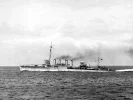
HNLMS De Ruyter in her original post-war configuration.

1765667557143.jpeg
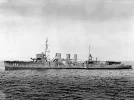
De Ruyter seen here in September 1971, just before she was decommissioned.

1765667645130.jpeg
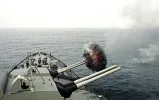
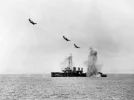
Almirante Grau firing her guns
 
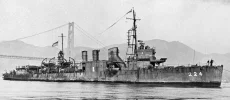
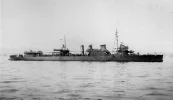
USS Stewart DD-224 was a Clemson class destroyer. It was severely damaged at the Battle of Badung Strait in early 1942. It limped back to port and was thought destroyed to prevent falling into Japanese hands.

However by 1943, American pilots began to notice a Japanese ship which had the distinctive 4 stack silhouette of a Clemson class destroyer. Stewart had raised, repaired and refitted as Patrol Boat 102.

Patrol Boat 102 served the Imperial Japanese Navy and survived WW2, surrendering to the American Navy in 1945. She was recommissioned into the US Navy on 29 October 1945 before being decommissioned for good in 1946.

USS Stewart (DD-224) underway c1930s
USS Stewart underway before WWII

1766195288700.jpeg

1766195378159.jpeg
as IJN Patrol Boat 102
1766195519717.jpeg

DD-224 after recapture from the Japanese Navy and recommissioning in the USN

1766195463832.jpeg
USS Stewart being sunk as a target.
 

Attachments

  • 1766194320559.jpeg
    1766194320559.jpeg
    120.6 KB · Views: 0
  • 1766194862263.jpeg
    1766194862263.jpeg
    44.2 KB · Views: 0
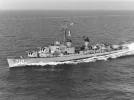
Thought I would take a look at the biggest US fleet destroyer in WW2, the Gearing class, with the Oliver Hazard Perry class frigate.

The Gearing was 390’ 5” long with a beam of 40’ 9” and a full load displacement of 3,500 tons.

4 boilers developed 60,000 HP and fed 2 shafts for 36.2 knots and a range of 4,500 nautical miles at 20 knots.

Crew: 350

1766261827820.jpeg
USS Gearing in 1960

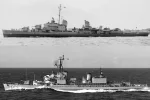
1766261913942.jpeg
Sarsfield (top) as delivered and Rowan(bottom) after FRAM I.


The biggest OHP was 453’ long with a beam of 45’ and a displacement of 4,200 tons.

2 LM2500 gas turbines developed 41,000 HP and fed a single shaft for 30 knots and the same 4,500 nautical miles range at 20 knots.

Crew: 176

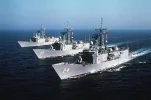
1766262007665.jpeg
The frigates Oliver Hazard Perry, Antrim, and Jack Williamsin 1982


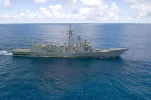
1766262093295.jpeg
USS Rodney M Davis after the removal of her foredeck Mk 13 missile launcher.
 
Back
Top