-
Please take a moment and update your account profile. If you have an updated account profile with basic information on why you are on Air Warriors it will help other people respond to your posts. How do you update your profile you ask?
Go here:
Edit Account Details and Profile
You are using an out of date browser. It may not display this or other websites correctly.
You should upgrade or use an alternative browser.
You should upgrade or use an alternative browser.
Random Griz Aviation Musings
- Thread starter Griz882
- Start date

Very cool. I earned my Eagle in 1979, right after Neil Armstrong stopped sending congratulations letters to candidates. My scouting friends disagree with me here, but I think scouting would have been even more fun if we had allowed girls back then.,
They did, you just had to find the right kind of unit. Joined a Sea Scout unit when I was 14 and more than half the scouts were girls, it was a lot more fun than my troop.

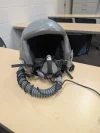
Scheduling my Aviation Physiology refresher - AF has moved away from the “chamber” and now for non-ejection seat AC the device is a “Reduced Oxygen Breathing Device” - basically a mask/helmet connected to a device that sucks O2 out to generate a hypoxia experience.
Anyone else experience this?>
Anyone else experience this?>

Yep, it’s the standard for the four year rehack Navy ejection seat folks (and I assume everyone else) does for aviation physiology and swim training. I honestly can’t remember the last time I had to do a chamber ride, but it was years ago.Scheduling my Aviation Physiology refresher - AF has moved away from the “chamber” and now for non-ejection seat AC the device is a “Reduced Oxygen Breathing Device” - basically a mask/helmet connected to a device that sucks O2 out to generate a hypoxia experience.
Anyone else experience this?>

Scheduling my Aviation Physiology refresher - AF has moved away from the “chamber” and now for non-ejection seat AC the device is a “Reduced Oxygen Breathing Device” - basically a mask/helmet connected to a device that sucks O2 out to generate a hypoxia experience.
Anyone else experience this?>
I'm pretty sure the ROBD was designed by the guy who taught the structures and engineering classes at the ASO school when I was there. IIRC he did it while on AD so he didn't get any money for royalties. I used it a couple of times- they had a little simulator built for it. It wasn't nearly as robust as the regular Hornet sim, but the idea was to experience a hypoxic state while doing some flying, execute the procedures, all while connected to a pulse-ox meter. The debrief and replay was interesting.
I thought it was worthwhile training.

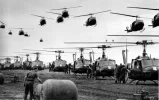
It may not have to panache of Naval Aviation, but at one time the Army did have a bit of a flair with Hueys.

Just fly to KVKX! It’s only a few miles away. Also, I thought (and I could be wrong) that the CAP kept their aircraft at Davis AAF.
CAP maintains four aircraft at JB Andrews to support CAP Congressional Squadron. You would be genuinely surprised at the sheer number of dues paying cap members who are in Congress. Either the elected representatives themselves or their senior staff. Many are rated pilots with FAA airmen certificates and are current.Just fly to KVKX! It’s only a few miles away. Also, I thought (and I could be wrong) that the CAP kept their aircraft at Davis AAF.
I'm actually headed to an AF event with the Air Force 1st Helicopter Squadron on the field.

My last flight at night in a fixed-wing was in 2008 with an IUT. I decided to change that the other night and regain my currency. Amazingly, all the lights worked in the cockpit.
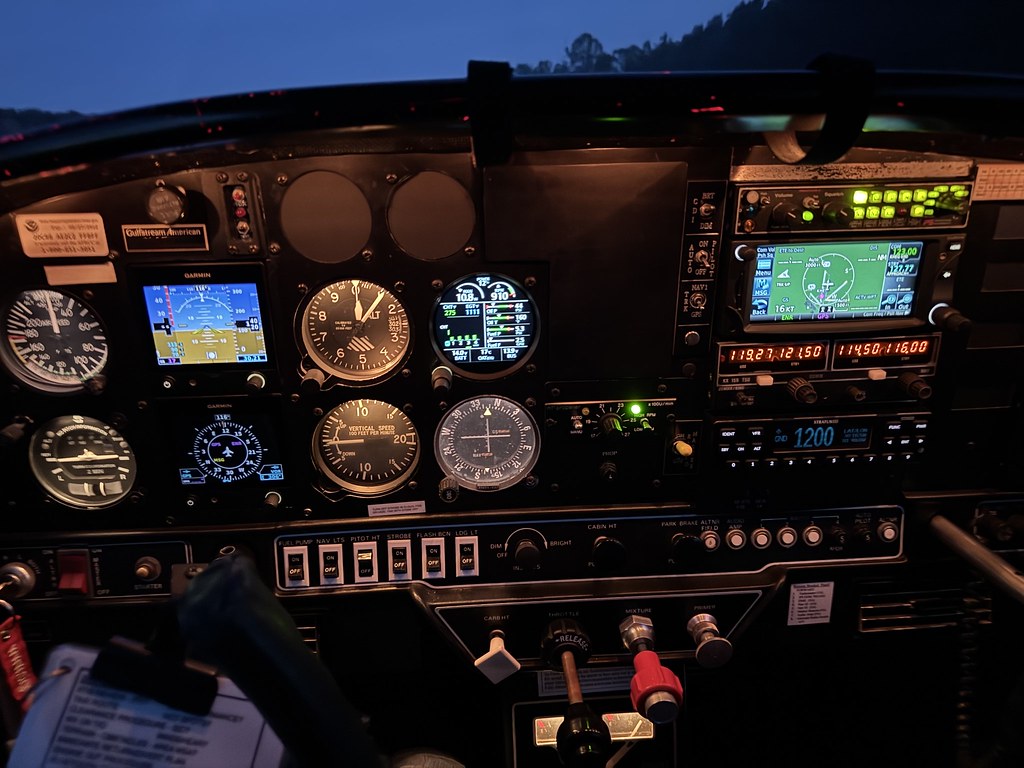
The particular runway I was working had a bunch of trees at the end that, when on glidepath, don't look that far below you. As I transitioned from pinky time into night, those trees completely disappeared, even with the LED landing light. I'm not going to lie, not being able to see an obstacle was kinda uncomfortable.
And you guys choose to fly around like that? I might as well have had a blind person's mobility cane.
I'm happy to report no "abrupt" landings once it got dark, so mission accomplished.
The particular runway I was working had a bunch of trees at the end that, when on glidepath, don't look that far below you. As I transitioned from pinky time into night, those trees completely disappeared, even with the LED landing light. I'm not going to lie, not being able to see an obstacle was kinda uncomfortable.
And you guys choose to fly around like that? I might as well have had a blind person's mobility cane.
I'm happy to report no "abrupt" landings once it got dark, so mission accomplished.

It’s not always that bad, but I always brief obstacles, especially at night. Instrument approaches help.My last flight at night in a fixed-wing was in 2008 with an IUT. I decided to change that the other night and regain my currency. Amazingly, all the lights worked in the cockpit.
The particular runway I was working had a bunch of trees at the end that, when on glidepath, don't look that far below you. As I transitioned from pinky time into night, those trees completely disappeared, even with the LED landing light. I'm not going to lie, not being able to see an obstacle was kinda uncomfortable.
And you guys choose to fly around like that? I might as well have had a blind person's mobility cane.
I'm happy to report no "abrupt" landings once it got dark, so mission accomplished.
1.) Night
2.) IMC
3.) Obstacles/Terrain
I pick up to two. All three is a no-go under most circumstances.
Well done @Gatordev !
and +1 @sevenhelmet - I wish more of my 30 hours/year flying club members would heed your excellent ORM! Sadly many do not.
As for me, at 61 - I don't operate at night to runways without a PAPI or an instrument approach with vertical guidance.
Pro tip, even when operating in a VFR pattern at night, I will either tune and present the LOC and GS or activate the final leg of an RNAV LPV/LNAV +V so when I turn base, I have a GS to back up my approach with. It really helps with SA for me.
Technologies!
and +1 @sevenhelmet - I wish more of my 30 hours/year flying club members would heed your excellent ORM! Sadly many do not.
As for me, at 61 - I don't operate at night to runways without a PAPI or an instrument approach with vertical guidance.
Pro tip, even when operating in a VFR pattern at night, I will either tune and present the LOC and GS or activate the final leg of an RNAV LPV/LNAV +V so when I turn base, I have a GS to back up my approach with. It really helps with SA for me.
Technologies!
It’s not always that bad, but I always brief obstacles, especially at night. Instrument approaches help.
You made me curious, so I went and looked up the departure obstacles for the opposite runway and they're calling "up to 100' AGL" and 186' MSL I'd have to do the math as to what that technically means for how high you'd be on final, on GP. In reality, I tend to fly a tight, Navy-esque pattern and a slightly steeper than normal approach in case the engine dies since getting the prop towards a near feathered condition won't happen quick enough at that altitude. So I'd guess I'm clearing the trees with ~100'...maybe a tad less?
So the question is, would you consider clearing obstacles by 80-100' actually an obstacle on landing? Honest question for discussion, as I'm curious to hear perspectives. My perception of reality is so skewed at this point with how close I get to obstacles in my day job that I don't know I have a decent barometer of "reasonableness" for the fixed-wing side.
Pro tip, even when operating in a VFR pattern at night, I will either tune and present the LOC and GS or activate the final leg of an RNAV LPV/LNAV +V so when I turn base, I have a GS to back up my approach with. It really helps with SA for me.
For the x50 GPS units, you can also set it to "VISUAL" and it will give you a 3 degree GS. Obviously not a solution if the glidepath is more than 3 degrees due to obstacles, but if all you have a LNAV approach or no approach for that particular runway (fairly common around here), it's another tool in the tool bag.
As for me, at 61 - I don't operate at night to runways without a PAPI or an instrument approach with vertical guidance.
I meant to follow up on this...this was my big takeaway from the evening. I'm so used to being able to see at night (even if unaided) that when I can't, having that PAPI/VASI really needs to be a requirement.