
-
Please take a moment and update your account profile. If you have an updated account profile with basic information on why you are on Air Warriors it will help other people respond to your posts. How do you update your profile you ask?
Go here:
Edit Account Details and Profile
You are using an out of date browser. It may not display this or other websites correctly.
You should upgrade or use an alternative browser.
You should upgrade or use an alternative browser.
Little known / experimental aircraft
- Thread starter Randy Daytona
- Start date

One of the coolest conversations I’ve ever had was at a New Year’s party with Lt Col (ret) Blair Bozek, a former RSO who ejected from the SR-71. As of 2019, he was working a contractor gig in the DC area. Great guy with some amazing stories!
All good background history.
Interesting interview with NASA’s lead propulsion engineer who worked on the SR-71:

Former SR-71 Engineer Talks NASA's Blackbird Revival Program
Insights into the current status of NASA's SR-71 #844, what it will take to fly it again, and what the agency may be looking to do with it.www.twz.com

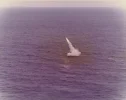
Did the recovery ops for the sub launched TLCM shoots in Maine (twice).

We used to chase those when I was in VX-9 years ago. The Super Hornet could be set up with a control panel we could use to take control of the missile in case they lost the ground control signal near a populated area. If all else failed, the chase aircraft could send the missile commands to steer away from populated areas and self-destruct (from a safe distance.)Did the recovery ops for the sub launched TLCM shoots in Maine (twice).
For launch, we’d rendezvous with the cruiser and set up a timing pattern, then join on the Tomahawk in the launch phase. It’s tricky- once the booster burns out, you have to be really close to see it and fly formation, so you had to nail your timing. Then escort the missile while talking to ATC and range control. Busy mission for sure.

Yeah, the A-6 had override controls as did the F-4. We had about a 60 second window when we could expect the missile to pop out of the water close to an orange buoy marker. The 4 chase a/c set up an orbit around the marker, with each a/c about 90 degrees apart. First plane to see it come out of the water was to latch on and keep sight for the reasons you mentioned. The other 3 would then join up. The pre-brief the day prior was interesting. The Pax guys said they'd gotten word that the Greenpeace people had plans to try to capture the missile with a net and helium balloons during the low-level over the FL panhandle. There were guard helos everywhere looking for suspicious vehicles along I-10. WhIle doing the wx recce and monitoring the control freq, which was the -880, we heard a helo report a strange Winnebago parked along I-10. The guys in the -880 directed us to check it out. We went into a spread formation at about 100 feet straddling the interstate looking. Made 3 passes up and back the stretch that the guard guys reported the Winnebago but never saw anything. Sure was fun though. A license to steal. So we then bingoed to the tanker and got gas to complete the mission.
I have fond memories of both my TLAM-N sub launch exercises! 1989 and again in 1990 staging out of then NAS Brunswick. The PAX -880 is also well remembered!
I remember how well funded and well resourced these events were. Nothing was spared. Each time we brought two H-46 helos from NAS Norfolk with a complete complement of pilots, aircrew and maint folks - with a support pallet of gear brought via C-9. Rental cars were generously doled out as was per diem. The BOQ an Brunswick was ours and many of our enlisted maintainers got off-base hotels.
Both ops occured in winter. I remember the -880 broadcasting status updated on UHF during the launches.
The TLAM had the capability of navigation based on passive imaging and Maine was chosen because the terrain and topography mimic its intended targets in Soviet Russia.
The scenario for us helo folks were as the recovery team. The TLAM would expend itself after hitting its target, deploy a chute and float to earth in the Maine mountains not far from Rangeley Mountain (home of East Coast SERE). Our job was to locate the missle visually, guided by the chase aircraft and hover over the target. We then hoisted down a General Dynamics civilian EOD type who would disarm/defuel the TLAM and render it safe for transport. We would lower a nylon harness and 100 foot pendant through the hell-hole and the tech would attach to the TLAM and after hoisting him back, we would lift the whole missile out of the woods and fly to a prepared clearing. Maine Army Guard personnel would refuel us from 55 gallon drums of JP-4 while we loaded the missile in the cabin and we would fly back to NAS Brunswick.
I remember once that the APU would not start on one event and we could not shut down to refuel. I made the decision as the HAC to gravity hot-refuel from hand cranked pump. Another time I remember the weather coming in and basically having to ITO out of the LZ in the Maine mountains and putting to use the ant-ice features of the H-46 that prior I had only read about.
Also fond memories of 2 am LL Bean shopping runs. I still have the Norwegian fisherman's sweater I purchased during one of these Dets. Oh and lobster. Much lobster.
One of my fellow pilots and co-pilot on the failed APU mission sortie was the late CDR Rob Murphy, USN who after retirement, went on to a successful career at NAVAIR as a GS and passed away too young while in his office at Pax. Rob was the NAVAIR PMO for MQ-8 Fire Scout at the time of his passing.
I remember how well funded and well resourced these events were. Nothing was spared. Each time we brought two H-46 helos from NAS Norfolk with a complete complement of pilots, aircrew and maint folks - with a support pallet of gear brought via C-9. Rental cars were generously doled out as was per diem. The BOQ an Brunswick was ours and many of our enlisted maintainers got off-base hotels.
Both ops occured in winter. I remember the -880 broadcasting status updated on UHF during the launches.
The TLAM had the capability of navigation based on passive imaging and Maine was chosen because the terrain and topography mimic its intended targets in Soviet Russia.
The scenario for us helo folks were as the recovery team. The TLAM would expend itself after hitting its target, deploy a chute and float to earth in the Maine mountains not far from Rangeley Mountain (home of East Coast SERE). Our job was to locate the missle visually, guided by the chase aircraft and hover over the target. We then hoisted down a General Dynamics civilian EOD type who would disarm/defuel the TLAM and render it safe for transport. We would lower a nylon harness and 100 foot pendant through the hell-hole and the tech would attach to the TLAM and after hoisting him back, we would lift the whole missile out of the woods and fly to a prepared clearing. Maine Army Guard personnel would refuel us from 55 gallon drums of JP-4 while we loaded the missile in the cabin and we would fly back to NAS Brunswick.
I remember once that the APU would not start on one event and we could not shut down to refuel. I made the decision as the HAC to gravity hot-refuel from hand cranked pump. Another time I remember the weather coming in and basically having to ITO out of the LZ in the Maine mountains and putting to use the ant-ice features of the H-46 that prior I had only read about.
Also fond memories of 2 am LL Bean shopping runs. I still have the Norwegian fisherman's sweater I purchased during one of these Dets. Oh and lobster. Much lobster.
One of my fellow pilots and co-pilot on the failed APU mission sortie was the late CDR Rob Murphy, USN who after retirement, went on to a successful career at NAVAIR as a GS and passed away too young while in his office at Pax. Rob was the NAVAIR PMO for MQ-8 Fire Scout at the time of his passing.
Last edited:

Another fun article - give the engineers a chunk of money and let’m run wild.I have read a couple different aviation periodicals that people (Dryden) are speculating that nasa is trying to bring it back as sort of a mach 3+ chase plane.
Doesn't make much sense to me since they already have a slick eagle that can do 2.5.

Could NASA's SR-71 Blackbird Be Modified To Reach Mach 4?
The SR-71's airframe is capable of going beyond its known top speed and NASA may have good reason to push its limits via new engines.
www.twz.com

Another fun article - give the engineers a chunk of money and let’m run wild.
Could NASA's SR-71 Blackbird Be Modified To Reach Mach 4?
The SR-71's airframe is capable of going beyond its known top speed and NASA may have good reason to push its limits via new engines.
Okay, so what I got from the article is that'll take a lot of money and careful testing to even attempt to do what the article title asks. They may find the money, because apparently the federal budget laws seems to be more of a suggestion than an actual budget nowadays, but they are likely going to run out of time before the next administration takes office and the folks championing this aren't likely to stick around.
So a couple of things to keep in mind, it is only a single aircraft so far and you would be seriously limited in what you may be able to do with a single bird. One bad flight or landing and you set the program back indefinitely. You can take the risk with some more 'benign' testing programs but exploring high speed flight like we haven't done in 60 or so years? That a big risk with a single test plane. Hypersonic (Mach 5+) flight research is done now with unmanned test platforms, why not Mach 3 and 4 testing too?
Than we get to the big question, why? What is the need for a Mach 3 or 4 plane nowadays? Likely not worth it for reconnaissance or strike aircraft as there are other assets that can do that. Passenger planes? A fleet of merely a dozen supersonic birds could barely break even, if they even did that. So why? What's the requirement or need that it is satisfying?
Okay, so what I got from the article is that'll take a lot of money and careful testing to even attempt to do what the article title asks. They may find the money, because apparently the federal budget laws seems to be more of a suggestion than an actual budget nowadays, but they are likely going to run out of time before the next administration takes office and the folks championing this aren't likely to stick around.
So a couple of things to keep in mind, it is only a single aircraft so far and you would be seriously limited in what you may be able to do with a single bird. One bad flight or landing and you set the program back indefinitely. You can take the risk with some more 'benign' testing programs but exploring high speed flight like we haven't done in 60 or so years? That a big risk with a single test plane. Hypersonic (Mach 5+) flight research is done now with unmanned test platforms, why not Mach 3 and 4 testing too?
Than we get to the big question, why? What is the need for a Mach 3 or 4 plane nowadays? Likely not worth it for reconnaissance or strike aircraft as there are other assets that can do that. Passenger planes? A fleet of merely a dozen supersonic birds could barely break even, if they even did that. So why? What's the requirement or need that it is satisfying?
Billionaire ego.

Winner winner !!Billionaire ego.
If AI starts to make stealth less effective, then it is a return to speed. Perhaps one could use the Blackbird’s proven airframe to test new propulsion systems in the speed range between Mach 3 and hypersonics - which eliminates the problems of the old engines and special fuel.
The Pentagon / US government has wasted money on lots of projects, but as someone who loves aviation I don’t mind the attempt here.
The Pentagon / US government has wasted money on lots of projects, but as someone who loves aviation I don’t mind the attempt here.
If AI starts to make stealth less effective, then it is a return to speed. Perhaps one could use the Blackbird’s proven airframe to test new propulsion systems in the speed range between Mach 3 and hypersonics - which eliminates the problems of the old engines and special fuel.
The Pentagon / US government has wasted money on lots of projects, but as someone who loves aviation I don’t mind the attempt here.
Do you have reason to believe that is the case? What hole would be filled by this tactically or strategically that more modern systems can’t handle? …I don’t see one.
As a taxpayer-funded, black-world project that helped win the Cold War and capture the spirit of American ingenuity, I’m a huge fan of the Blackbird. It was a historic airframe that I and many other pilots would give our left nuts to fly.
As what appears to be yet another billionaire vanity project, I’m not on board. A good NASA administrator is there to secure funding for current and future projects that will further research and exploration, not blow funding on resurrecting historic ones that aren’t sustainable.
If it turns out I’m wrong about my assumptions here, I’ll gladly admit the error, but the optics of this… aren’t great.
My guess is the Blackbird itself is not being used tactically or strategically- rather it is an off the shelf, almost ready to go airframe that can do research and exploration for the propulsion units in the Mach 3-5 range for the next generation of aircraft - and provide good public relations and excitement at the same time. Again, just a guess.Do you have reason to believe that is the case? What hole would be filled by this tactically or strategically that more modern systems can’t handle? …I don’t see one.
As a taxpayer-funded, black-world project that helped win the Cold War and capture the spirit of American ingenuity, I’m a huge fan of the Blackbird. It was a historic airframe that I and many other pilots would give our left nuts to fly.
As what appears to be yet another billionaire vanity project, I’m not on board. A good NASA administrator is there to secure funding for current and future projects that will further research and exploration, not blow funding on resurrecting historic ones that aren’t sustainable.
If it turns out I’m wrong about my assumptions here, I’ll gladly admit the error, but the optics of this… aren’t great.

