All of my kids have seen the movie. Showing it to them was a moral imperative.A lot of the younger generations will not understand this reference.
View attachment 45570

All of my kids have seen the movie. Showing it to them was a moral imperative.A lot of the younger generations will not understand this reference.
View attachment 45570

That was me with my daughters with Monty Python’s Holy Grail.All of my kids have seen the movie. Showing it to them was a moral imperative.


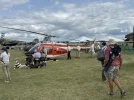
Last night’s talking head take (no actual helicopter pilots) was that multiple bird strikes damaged the advancing blade causing the retreating blade to sever the tail boom. They also mentioned that multiple strikes around the vertical stabilizer may have had some effect.NTSB report is out on the Bell 206 air tour crash in the Hudson.
Apparently a bird stick to rotor blade.
Doesn't state type of bird, presumed goose based on witness pre-crash observation.
My Mallard to CH-46 blade strike did nothing to blade, buy definitely ended the duck's flying career.
Yes I'm aware they are different sized birds and blades.
Even it this were a bird strike, nothing in the report connects the dots from bird strike to loss of controlled flight to aircraft disintegration.
Hopefully further investigation will clear this up.
All report documents:
NTSB Docket - Docket Management System
data.ntsb.gov
The report notes that he made a sudden climb in the final moments of the flight, so you might be on to something.A probable scenario, based on knowns, might be that he made a low speed abrupt divergence (pulling up and either left or right) to avoid birds (again assumed geese based on pre-crash witness observation), striking bird(s) during the maneuver. If not smoothly applied (maintaining positive g-load on the rotor system) he might have unloaded the rotor, striking the tail boom which caused a blade breakup. Subsequent unbalanced rotor system overloaded the transmission attachment bolts causing power system to separate from the cabin roof deck.
A bird strike, even with a Canada goose, in and of itself should not have cause the crash. Maneuvering to avoid definitely could have done this.
Should the NTSB release the actual type of bird, identified by the feather fragments analysis, that info would assist in pilot time to see and attempt to avoid bird(s) based on size and visible signature.


Game of inchesI never really bought the warning on the H60 and after cyclic while landing / tail-main rotor contact until I had someone do it. Luckily, it was just the IGB cover getting sliced, so was non-mishap.

Judging by the nervous giggles about halfway through that video, I'm guessing no one died in the making of it.This ain’t right…