-
Please take a moment and update your account profile. If you have an updated account profile with basic information on why you are on Air Warriors it will help other people respond to your posts. How do you update your profile you ask?
Go here:
Edit Account Details and Profile
You are using an out of date browser. It may not display this or other websites correctly.
You should upgrade or use an alternative browser.
You should upgrade or use an alternative browser.
Random Griz Aviation Musings
- Thread starter Griz882
- Start date

I’ve flown along the border there (El Paso to Van Horn following I-10) and the Texas Army Guard has a lot of UAV and counter-UAV elements along the border there.

The whole “THE AIRSPACE IS CLOSED FOR A WEEK AND A HALF, AND WE RESERVE THE RIGHT TO SHOOT DOWN ANYTHING THAT FLIES INTO THE AIRSPACE…never mind” thing deserves a little bit deeper of an investigation.



Weapons Used to Fight Drones Don’t Mix Well With Civilian Airspace
In the race to build anti-drone weapons intended for use in a war zone, it is unclear how they may be used safely in crowded skies.
The clown wave continues

 www.nytimes.com
Border Officials Are Said to Have Caused El Paso Closure by Firing Anti-Drone Laser
People familiar with the episode said the use of the technology was not coordinated with the Federal Aviation Administration. Officials targeted what they thought was a drug cartel drone, but turned out to be a party balloon, they said.

FIFYTheclown waveparty continues
Border Officials Are Said to Have Caused El Paso Closure by Firing Anti-Drone Laser
People familiar with the episode said the use of the technology was not coordinated with the Federal Aviation Administration. Officials targeted what they thought was a drug cartel drone, but turned out to be a party balloon, they said.

I saw this and curiosity is getting the better of me so I'll ask the experts.
Since there are no flying F14s (friendly) and I would imagine nothing from a Grumman would go into a McDonnell plane why would the canopies be open like they are being cannibalised
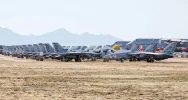
Since there are no flying F14s (friendly) and I would imagine nothing from a Grumman would go into a McDonnell plane why would the canopies be open like they are being cannibalised
"I saw this and curiosity is getting the better of me so I'll ask the experts.
Since there are no flying F14s (friendly) and I would imagine nothing from a Grumman would go into a McDonnell plane why would the canopies be open like they are being cannibalised
View attachment 44559
In recent photos from the 309th Aerospace Maintenance and Regeneration Group (AMARG) at Davis-Monthan Air Force Base, you may notice that the few remaining F-14 Tomcats have their canopies open or seemingly ajar. While this looks unusual for "mothballed" aircraft, it is part of a deliberate maintenance and disposal process.
1. Stripping and Parts Reclamation
The primary reason you see open canopies is Type 2000 Storage (Parts Reclamation). Almost all F-14s at AMARG have been "gutted" to ensure that sensitive components and spare parts do not end up on the black market—specifically to prevent them from reaching Iran, the only other nation that still operates the Tomcat.- Cockpit Stripping: Maintenance crews must open the canopy to remove avionics, ejection seat charges, and flight instruments.
- Sealant Removal: If an aircraft is being moved or prepared for final scrapping, the "Spraylat" (the white protective vinyl coating) is removed, and the canopy is opened to access the interior for one last inspection or part harvest.
2. Preparation for Scrapping
The U.S. Navy ordered the total destruction of the F-14 fleet to prevent any possibility of parts smuggling. In recent years, the Tomcats at Davis-Monthan have reached the end of their "shelf life."- Final Inventory: Before an airframe is sent to the "shredder," technicians open the cockpit to ensure no hazardous materials (like explosive bolts for the canopy or ejection seats) remain.
- Structural Demolition: In many recent photos, the canopies aren't just "open"—the hinges have been disconnected or the frames damaged as the aircraft is prepared for the reclamation of its high-value metals (like titanium).
3. Humidity and Pressure Regulation
While most aircraft are sealed with Spraylat to keep them cool, if the seal is breached or the aircraft is being moved between storage types:- Heat Dissipation: In the 100°F+ Arizona heat, a sealed cockpit can act like a greenhouse, reaching temperatures that can melt plastics or damage remaining airframe components.
- Pressure Equalization: If the aircraft's Environmental Control System (ECS) is being drained or serviced, the canopy may be left cracked to prevent pressure seals from fusing in the desert sun."
Last edited:
Not today Iran.I saw this and curiosity is getting the better of me so I'll ask the experts.
Since there are no flying F14s (friendly) and I would imagine nothing from a Grumman would go into a McDonnell plane why would the canopies be open like they are being cannibalised
View attachment 44559
"
In recent photos from the 309th Aerospace Maintenance and Regeneration Group (AMARG) at Davis-Monthan Air Force Base, you may notice that the few remaining F-14 Tomcats have their canopies open or seemingly ajar. While this looks unusual for "mothballed" aircraft, it is part of a deliberate maintenance and disposal process.
1. Stripping and Parts Reclamation
The primary reason you see open canopies is Type 2000 Storage (Parts Reclamation). Almost all F-14s at AMARG have been "gutted" to ensure that sensitive components and spare parts do not end up on the black market—specifically to prevent them from reaching Iran, the only other nation that still operates the Tomcat.
- Cockpit Stripping: Maintenance crews must open the canopy to remove avionics, ejection seat charges, and flight instruments.
- Sealant Removal: If an aircraft is being moved or prepared for final scrapping, the "Spraylat" (the white protective vinyl coating) is removed, and the canopy is opened to access the interior for one last inspection or part harvest.
2. Preparation for Scrapping
The U.S. Navy ordered the total destruction of the F-14 fleet to prevent any possibility of parts smuggling. In recent years, the Tomcats at Davis-Monthan have reached the end of their "shelf life."
- Final Inventory: Before an airframe is sent to the "shredder," technicians open the cockpit to ensure no hazardous materials (like explosive bolts for the canopy or ejection seats) remain.
- Structural Demolition: In many recent photos, the canopies aren't just "open"—the hinges have been disconnected or the frames damaged as the aircraft is prepared for the reclamation of its high-value metals (like titanium).
3. Humidity and Pressure Regulation
While most aircraft are sealed with Spraylat to keep them cool, if the seal is breached or the aircraft is being moved between storage types:
- Heat Dissipation: In the 100°F+ Arizona heat, a sealed cockpit can act like a greenhouse, reaching temperatures that can melt plastics or damage remaining airframe components.
- Pressure Equalization: If the aircraft's Environmental Control System (ECS) is being drained or serviced, the canopy may be left cracked to prevent pressure seals from fusing in the desert sun."
Thanks Chuck


Inside the Debacle That Led to the Closure of El Paso’s Airspace
The F.A.A., citing “a grave risk of fatalities” from a new technology being used on the Mexican border, got caught in a stalemate with the Pentagon, which deemed the weapon “necessary.”
 www.nytimes.com
I’m picturing a laser drilling a hole through some guy's eyeballs back in row 23 while looking out the window on final approach.View attachment 44566
Inside the Debacle That Led to the Closure of El Paso’s Airspace
The F.A.A., citing “a grave risk of fatalities” from a new technology being used on the Mexican border, got caught in a stalemate with the Pentagon, which deemed the weapon “necessary.”
Keep those shades down, folks.
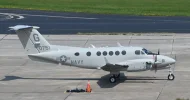
A great shot of current T-54A from VT-35 - what a great looking airplane. The AF is already having "buyer's remorse" on the loss of the T-1A and current multi-engine GA (Piper Seminole) focused pipeline. I would not be surprised if AF C-130 bound students wind up at VT-35 again.
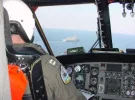
A pic from my era - this is a UH-3H of Norfolk based HC-2 of the "Desert Ducks" forward deployed to Bahrain. Probably 1994'ish time frame. Note the ancient Trimble GPS on the glare shield and the newly issued HGU-84/P helmet. Also this was about when Navy adopted shoulder rank insignia on flight suits. The Trimble GPS were squadron/field installation and could even be installed while on det. It was the first real operational GPS and had only a "direct to" and maybe 5 waypoints.